
Rural Life
Life on a Farm and Relationships: Building Routines Together
The daily rhythm of farm life, balancing chores with partnership, and the seasonal demands that shape rural couples.
Read More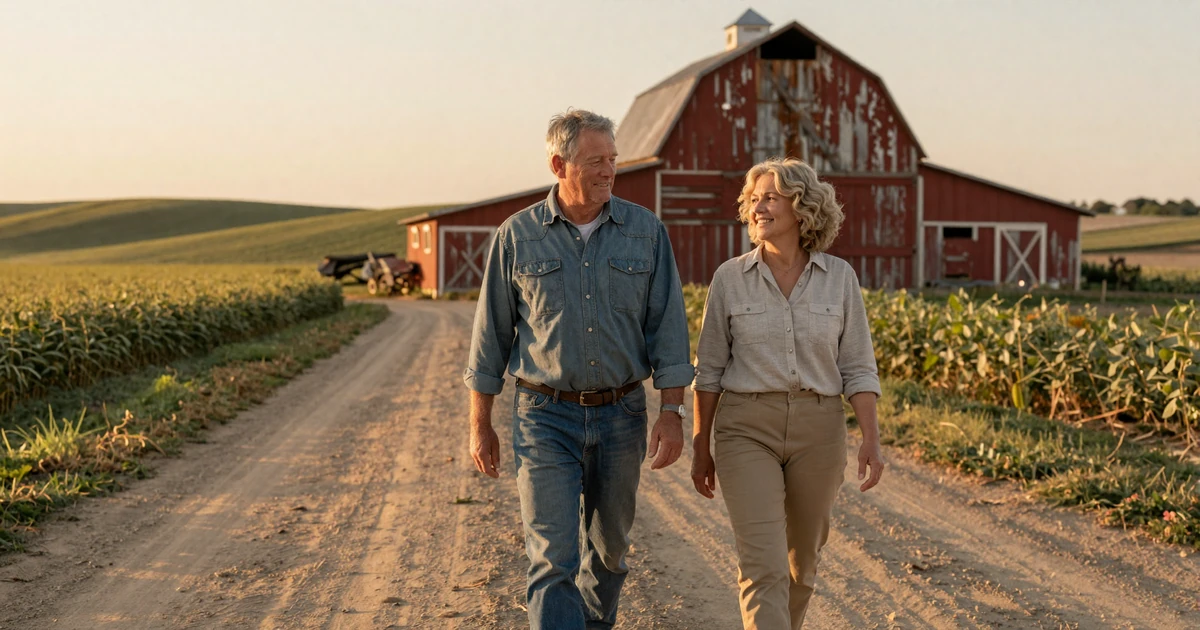
Dating a farmer begins with understanding that a farm runs on weather and livestock, not on a clock. Most farmers are up before sunrise, in the field or the barn by 6 a.m., and back inside only after evening chores. Weekends look like weekdays during peak seasons. If you are used to a 9-to-5 schedule and Friday-night plans, this is the single biggest adjustment to make.
Rural America also has a math problem when it comes to dating. Jerry Miller, who has spent twenty years studying rural singles, once described a Kansas man with only eleven single people in a 30-mile radius - nine men and two women he had already known since grade school. Farmers work long days with livestock and crops, leaving little time for socializing, and in a small town, everyone already knows everyone. That is why online introductions are now the normal way rural couples meet.
Here is the thing: the farmer you are getting to know is not being distant when they go quiet for three days. They are likely moving cattle, fixing equipment before a rain, or running a combine until midnight. Taking silence personally is the fastest way to end a promising connection before it starts.
Before you plan a first date, picture the full week. A dairy farmer milks twice a day, every day, including Christmas. A row-crop farmer is glued to the field from late March through early November. A rancher may drop everything for a sick calf at 3 a.m. Asking a few simple questions - "What does your Tuesday usually look like?" or "When is your quietest month?" - will tell you more about compatibility than any personality quiz.
Farmers value honesty over flash. John Sellers, a longtime member of rural dating communities, put it plainly when describing how he met his partner Susan: he was drawn to her profile because the introduction sounded like a real person, not a performance. "There are so many posters that don't have the honesty factor," he said. "If they portray themselves honestly, they have a partial chance to meet a soul mate. You take the chance. You are not going to win all the time, but I did."
"If they portray themselves honestly, they have a partial chance to meet a soul mate. You are not going to win all the time, but I did."
- John Sellers, rural dating site member
In practice, that honesty shows up in a few specific ways. Farmers appreciate a partner who can be steady under pressure, flexible about plans, comfortable with animals and weather, and patient when the tractor breaks on a Saturday morning. They do not expect you to know how to drive a skid steer or brand a calf. They do expect you to show up, mean what you say, and not make a scene when a date is moved from 6 p.m. to 9 p.m. because a storm is coming.
Life experience counts for a great deal in this community. Most members on SeniorDatingSenior are 55 and older, and many are widowed or divorced. They are not looking for reinvention. They are looking for a companion who understands that loyalty, quiet humor, and a warm kitchen matter more than any app's match score.
Good communication with a farmer is short, timely, and honest. Expect replies in bursts - first thing in the morning, at lunch, and after sundown - not a steady stream throughout the day. Three short texts that land at the right moments tell you more about someone than a dozen long messages that arrive at random.
Send a message in the early morning or after evening chores. Avoid long paragraphs in the middle of a workday.
Ask direct questions. "What are you hoping to find?" beats a winking one-liner every time.
A ten-minute call while they drive home from the feed store is worth a week of texting.
Build in a Plan B. Rain during harvest always wins. Flexibility is a love language out here.
The farming calendar is the single biggest factor in rural dating. Spring planting in April and May, haying through summer, harvest from late August into November, and calving in late winter all compete for attention. The quiet windows - late November through February in most of the Midwest, and midsummer for livestock-only operations - are when courtship actually has room to breathe.
Good first dates respect those windows. Coffee at the local diner at 7 a.m. before the feed run. A Sunday afternoon drive to a farmers market. A winter-evening dinner in town. For a deeper look at the year-round rhythm, our guide to seasonal dating challenges farmers face breaks down each month, and our list of rural date ideas gives you plenty of low-key options that actually fit country life.
Consider this: the best predictor of whether a rural relationship will last is not chemistry on the first date. It is whether both people can keep showing up during the busiest six weeks of the year. Ask early about harvest, calving, and planting. The answer tells you what the relationship will feel like in season three.
After a decade of watching rural matches succeed and fail, the patterns are clear. The warning signs tend to show up early, and so do the good signs - if you know what to look for.
| Red Flags | Green Flags |
|---|---|
| Vague profile with no photo of actual rural life | Photos in real settings - barn, field, pickup, front porch |
| Refuses a short phone call before meeting | Calls or voice notes within the first week |
| Pushes to move off the dating site right away | Comfortable keeping messages on the platform until trust is built |
| Stories shift between messages - job, location, family | Consistent details, remembers what you said last week |
| Mentions money trouble or emergencies early | Financial stability is assumed, not discussed |
| Unwilling to meet in a public daytime spot | Suggests a diner, farmers market, or county fair for first meet |
If something feels off, trust that feeling. Our safety tips page walks through verification, romance-scam prevention, and how to report a suspicious profile. Rural singles are a frequent scam target because our community is warm and trusting by nature - read the safety page before your first message exchange, not after.
Dating a farmer is not harder - it is different. The main adjustment is the calendar. Farmers work long days through planting, harvest, and calving, with almost no flexibility during those windows. If you can be patient through six to eight busy weeks a year and enjoy a quieter rhythm the rest of the time, farm relationships tend to be steady, loyal, and long-lasting.
Online is now the most common way rural singles meet, because farm work leaves little time for socializing and small-town dating pools are tiny. A niche site like SeniorDatingSenior filters for mature rural singles specifically. Offline, try county fairs, farmers markets, agricultural extension events, rodeos, and rural church suppers.
Yes, increasingly. Farmers 50 and older tend to prefer desktop and tablet over phone apps, and they favor dating sites designed for rural singles over mainstream swipe apps. Verified profiles, honest bios, and filters for farming type matter more to this audience than flashy interfaces.
Dress like yourself and plan for the setting. For a diner breakfast or farmers market, clean jeans and a comfortable shirt are perfect. For a small-town dinner, a simple dress or button-down works. Avoid anything you would hesitate to wear around animals, dust, or unpaved ground - rural first dates are rarely red-carpet affairs.
Most rural couples exchange messages for one to three weeks, have at least one phone or video call, and then meet in a public daytime place. Rushing tends to backfire. Dragging it out past a month without a call usually means someone is not ready - or not real.
Long-distance is common in rural dating because the nearest compatible match may be two states away. Our guide to long-distance rural relationships covers visit planning, communication cadence, and how couples decide whether - and when - someone moves.
The daily rhythm of farm life, balancing chores with partnership, and the seasonal demands that shape rural couples.
Read More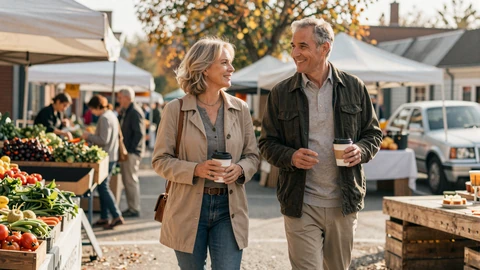
Coffee at the diner, county fair outings, farmers market walks, barn dances, and sunset picnics. Real ideas for country folks.
Read More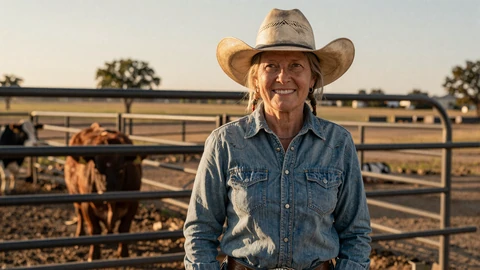
Meet country-lifestyle singles who share your values - ranchers, cowboys, cowgirls, and homesteaders looking for real partnership.
Read MoreLooking for someone closer to home? Browse rural singles by state - start with Iowa, Texas, or Montana, or see the full list on our local farmers dating hub.